

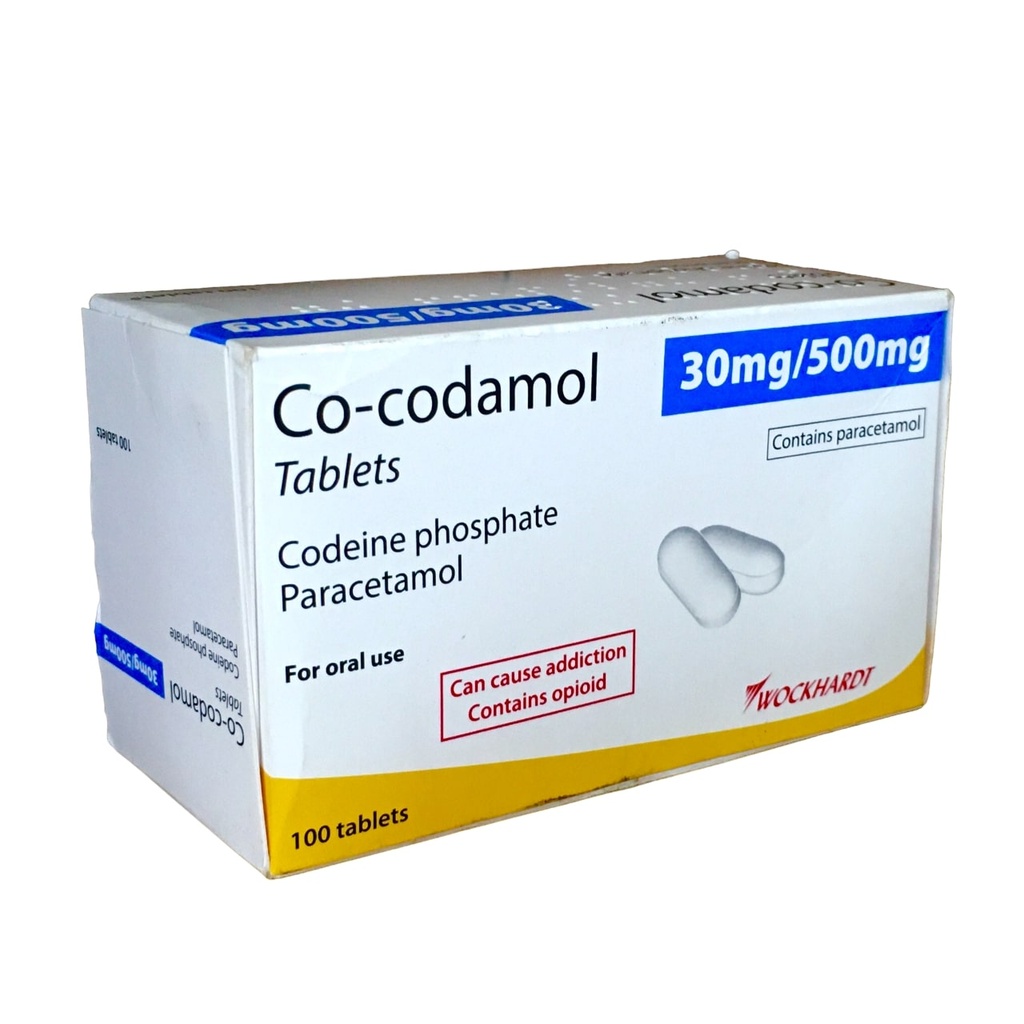
Co-codamol 30/500 is a prescription painkiller widely used in the UK for moderate to severe pain that is not relieved by standard analgesics like paracetamol or ibuprofen alone. Each tablet contains 500 mg of paracetamol and 30 mg of codeine, combining a non-opioid and a weak opioid for stronger pain relief.
Clinical evidence shows that this combination is effective because codeine is converted into morphine in the body, enhancing pain control when added to paracetamol.
👉 Summary: Effective for stronger pain, especially after surgery or injury.
⚠️ 2. Safety and risks (UK prescribing guidance)
UK prescribing data highlights important risks:
- Addiction and dependence can develop with prolonged use
- Drowsiness and respiratory depression may occur at higher doses
- Combining with alcohol or sedatives increases serious risks
Patients are advised:
- Not to exceed recommended doses
- Not to take other paracetamol-containing medicines simultaneously
- To use it for short durations only
👉 Summary: Effective but carries opioid-related risks, requiring careful use.
🇬🇧 3. UK dosage and regulation
In the UK:
- 30/500 strength is prescription-only
- Typical adult dosing: 1–2 tablets every 4–6 hours, up to a maximum of 8 tablets per day
- Lower strengths (e.g., 8/500) may be available from pharmacies without prescription
Guidelines emphasize:
- Use only when other painkillers fail
- Regular review if used beyond a few days
👉 Summary: Stronger dose is restricted and medically supervised.
🧠 4. Dependence and long-term concerns
UK data shows that prolonged use of co-codamol can lead to:
- Tolerance (needing higher doses)
- Withdrawal symptoms if stopped suddenly
- Increased risk in people with a history of substance misuse
Because of this, healthcare providers are advised to:
- Prescribe the lowest effective dose
- Monitor patients regularly
- Avoid long-term use unless absolutely necessary
👉 Summary: Long-term use is discouraged due to dependence risk.
👍 Overall conclusion
Co-codamol 30/500 is a powerful combination painkiller commonly used in the UK when simpler treatments are ineffective. It provides effective relief by combining paracetamol with codeine, but its opioid component means it must be used short-term, at controlled doses, and under medical supervision.