

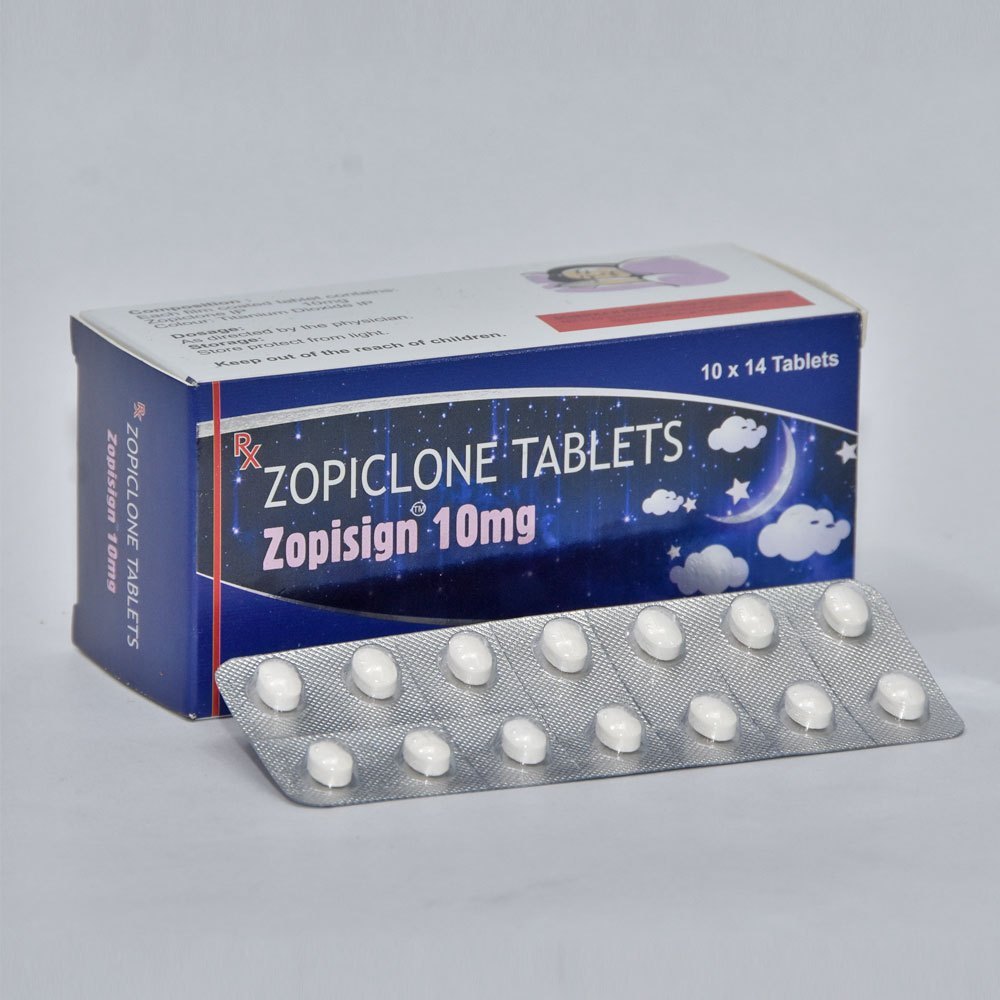
Zopisign 10 mg contains Zopiclone, a non-benzodiazepine hypnotic used to treat insomnia. Clinical evidence reviewed by the National Institute for Health and Care Excellence shows that drugs like zopiclone help patients:
- Fall asleep faster
- Improve total sleep time
- Reduce night awakenings
However, studies comparing Z-drugs (zopiclone, zolpidem, zaleplon) found no consistent superiority between them, meaning they are broadly similar in effectiveness.
👉 Summary: Zopiclone-based medicines like Zopisign are effective but not significantly better than alternatives.
🧪 2. Dose and UK prescribing practice
Although Zopisign is sold as 10 mg, UK clinical practice typically uses:
- 7.5 mg as the standard adult dose
- 3.75 mg for elderly patients
UK guidance recommends using the lowest effective dose due to risks such as sedation and dependence. Clinical trials included doses around this range and showed effectiveness over 1 night to 6 weeks of treatment.
👉 Summary: 10 mg exists but is higher than typical UK prescribing norms.
⚠️ 3. Safety and side effects (UK evidence)
Clinical and UK regulatory data show that zopiclone can cause:
- Next-day drowsiness
- Impaired coordination (e.g., driving performance)
- Increased risk of accidents in some studies
A UK-based analysis found that zopiclone use was associated with higher risk of road traffic accidents, likely due to residual sedation.
👉 Summary: Effective, but safety concerns—especially next-day impairment—are important.
🇬🇧 4. UK guideline position
The National Health Service and NICE guidance recommend:
- Use only for short-term insomnia (2–4 weeks)
- Avoid long-term use due to dependence and tolerance
- Prefer non-drug treatments (like CBT for insomnia)
👉 Summary: Zopiclone (including Zopisign) is strictly short-term in the UK.
👍 Overall conclusion
- Zopisign 10 mg = zopiclone-based sleeping tablet
- Clinically proven to improve sleep onset and duration
- In the UK:
- Lower doses are preferred
- Used short-term only
- Careful monitoring is required due to side effects